
Insights & Case Studies
Practical insight on production power, energy efficiency, fuel, cost and carbon — explained through real data, production learning and supplier-informed work.
Learning from real productions.
Silent Witness
Hybrid-battery learning across unit base and lighting
A three-year transition to hybrid generator-battery power reduced combustion runtime by more than half, with wider learning across unit base and lighting power.
Wrong Move
Clean power insight report
Lessons from battery, ERICA board and Victron data to understand how effective the power plan was, what worked in practice and what could support future productions.
Eurovision
Mobile UPS and grid-backed broadcast power
A mobile UPS drew on grid electricity to power live technical transmission and the broadcast compound, with HVO generators retained as contingency. This avoided several thousand litres of generator fuel.
Strictly Come Dancing
Studio and entertainment power learning
A similar grid-backed UPS approach helped reduce reliance on generator power in a transmission-critical entertainment environment, showing the value of early demand forecasting and resilience planning.
Chelsea Flower Show
Hybrid-battery cost and fuel learning
Hybrid-battery power reduced HVO consumption by almost a quarter, but overall costs increased because the shorter production period gave less time to recover the additional infrastructure cost.
Here We Go
Scripted production power learning
Clean power learning from a scripted production context, including practical lessons on fuel use, production constraints and evidence needed to support future planning.
Evidence from production data: D-Carbon’s approach draws on measured data and insight from 40+ UK productions. Across selected productions, embedded monitoring and power management delivered evidenced fuel reductions of 30–60%, while generator load factors frequently operated at around 20% or less of rated capacity.
Production names describe work undertaken; no broadcaster, studio or event endorsement is implied. Reported outcomes reflect specific productions, configurations and periods; results vary.
Clean power needs structure and support.
A public case study from a long-running drama reported significant fuel reduction and energy efficiency improvement through energy monitoring, early planning, supplier collaboration and hybrid power implementation.
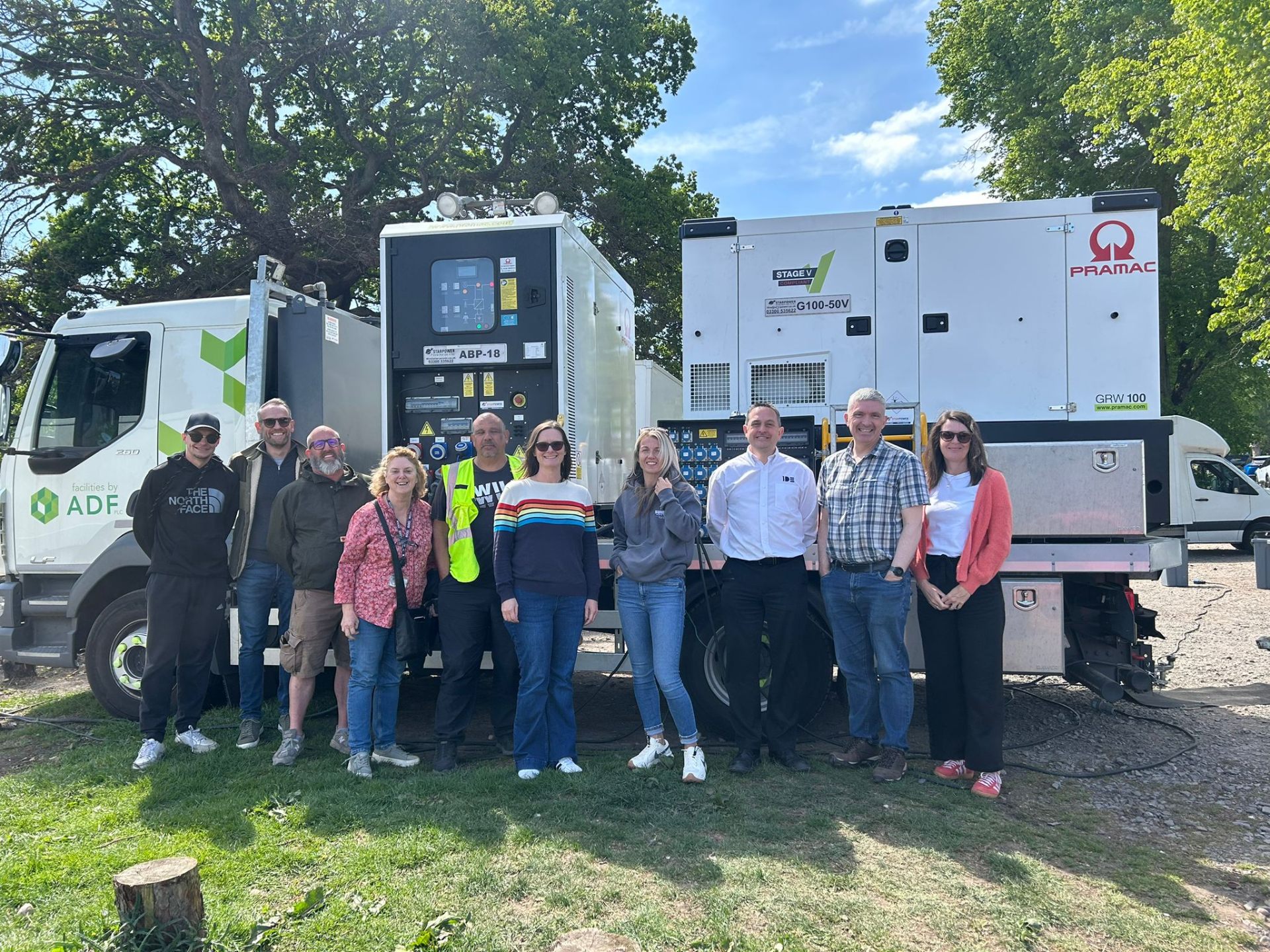
"Hybrid/battery generators are the way forward!"
Reported outcomes from a specific production, configuration and period; results vary.
Reported fuel reductions across selected clean power case studies.
Case study data from more than 40 clean power solutions. Results vary by production type, location, power demand, supplier model, operational decisions and data quality.
Why energy efficiency matters.
Cleaner power is not only about replacing diesel. The biggest gains often come from reducing the amount of fuel needed to deliver the same production outcome.
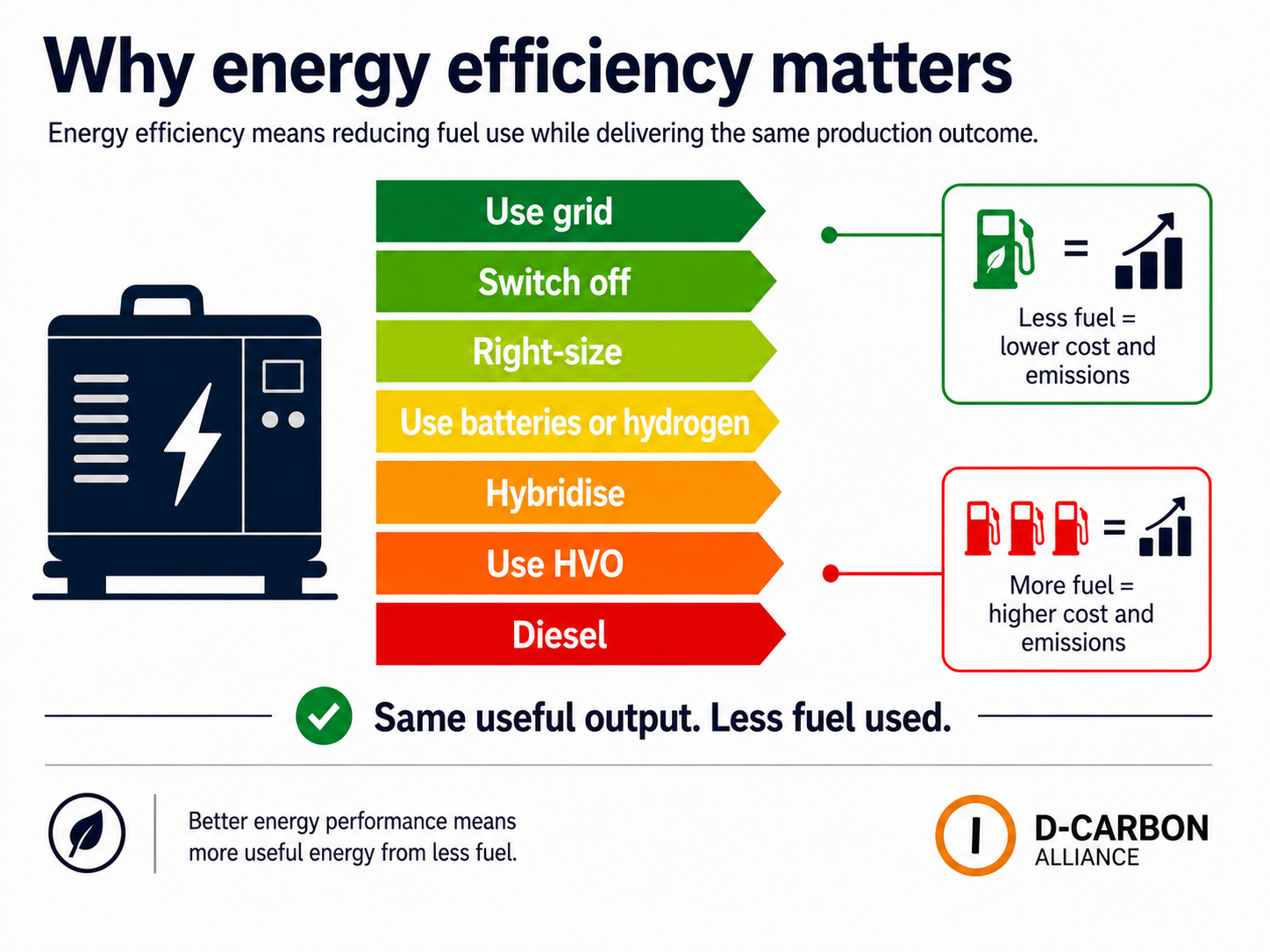
D-Carbon uses this hierarchy to help productions prioritise practical action: use available grid power, switch off unnecessary load, right-size equipment, and use batteries, hybrid systems or lower-carbon fuels where they are appropriate.
The hierarchy is a planning guide, not a fixed rule. The right approach depends on location, load profile, runtime, resilience needs, supplier availability and production risk.
Production power, explained.
Short, practical explainers to help productions understand fuel, carbon, cost and cleaner power planning.
Why generators waste fuel
Generators waste fuel when they are oversized, lightly loaded or left running longer than needed. This often happens because power demand is assumed rather than measured, decisions are made late, and performance is rarely reviewed. Measuring load, runtime, fuel and kWh helps productions see whether the system was efficient — and where fuel, cost and carbon could be reduced next time.
What kWh/L tells you
kWh/L shows how much useful energy a generator-based system delivers for each litre of fuel. A low result can indicate avoidable fuel waste, oversizing or unnecessary runtime. A higher result can show that the system was better sized, loaded, managed or supported by grid or battery power.
Why HVO is not the whole answer
HVO can reduce reported carbon emissions, but it does not remove the need to reduce fuel volume, generator runtime or dependency on generators. Cleaner fuel is not the same as cleaner power. Productions still need to understand whether fuel use was necessary, efficient and avoidable.
What productions need to measure
To understand whether temporary power worked well, productions need more than total fuel use. The useful core data includes system runtime, fuel used, fuel type, energy delivered in kWh, peak load and what the system powered. This helps turn power data into planning, budgeting and review evidence.
Why peak load needs context
Peak load shows the highest demand on a power system at a single point. It matters for system design and grid feasibility, but it is not the whole requirement. Adding up every item's maximum load assumes everything runs flat out at once, which can reinforce oversizing. Good planning needs interpretation of load profile, timing, context and diversity.
Why clean power needs planning, not just equipment
Cleaner temporary power is not only about swapping generators or adding batteries. The biggest savings come from early demand forecasting, right-sizing equipment, scheduling runtime and choosing the right supplier model. Equipment helps, but planning decides whether the system is efficient, resilient and affordable.
Professional recognition & published work
Society for the Environment — Highly Commended
Suzanne Dolan was Highly Commended for Environmental Professional of the Year by the Society for the Environment, recognising her contribution to practical sustainability and production decarbonisation.
View recognitionPublished case study — ISEP
Suzanne’s published ISEP case study demonstrates how the Greenhouse Gas Management Hierarchy can be applied to temporary power in film and television, drawing on measured evidence from more than 40 UK productions.
View the case studyFrom insight to production support.
These insights are informed by practical tools and templates used within D-Carbon production support to help productions plan, evidence and review cleaner temporary power.
Grid feasibility review, supplier briefing support, clean power reporting and evidence for albert certification can be included as part of D-Carbon's Clean Power Review or Energy Efficiency Action Plan.